Software-Defined Fleet Systems
Robots, gateways, and field controllers are built to last for years, while the software running them needs to change every few weeks. A software-defined fleet separates the two, allowing physical machines to stay put while their capabilities keep moving forward.
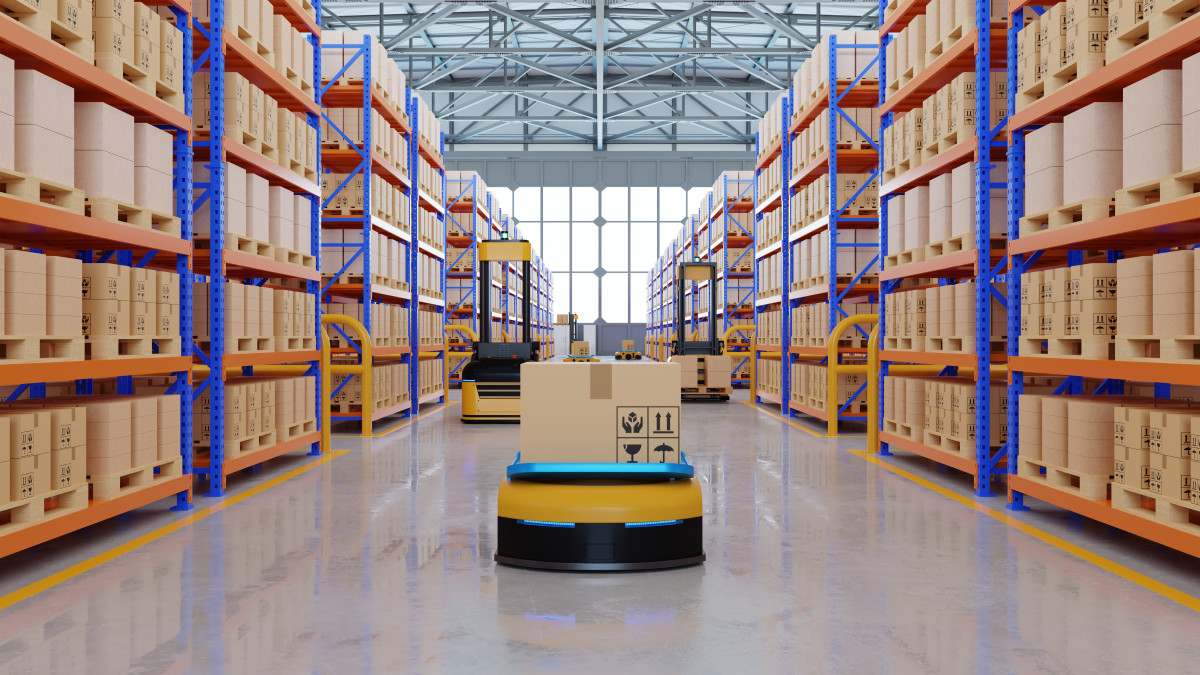
Image via PxHere
Take a fleet of 500 warehouse robots: updates roll out remotely in waves, failures revert automatically, and operators immediately see which machines need attention without sending anyone on-site.
What a Software-Defined Fleet Is #
A software-defined fleet treats physical assets as programmable compute nodes rather than fixed appliances. Operational capabilities, safety policies, and domain logic are abstracted from the underlying hardware and updated over the air across the asset’s lifespan.
| Dimension | Connected IoT | Software-Defined Fleet |
|---|---|---|
| Asset Role | Passive telemetry sensor | Autonomous local compute node |
| Coupling | Board-bound monolithic firmware | Hardware-abstracted OS & workloads |
| Updates | Manual or scheduled full flashes | Automated remote updates with auto-rollback |
| Scaling | Effort grows with unit count | Declarative fleet state reconciled automatically |
| Lifespan Value | Fixed at the factory | Compounds via continuous delivery |
Why It Matters #
- Faster rollout cycles: Replacing manual flashing with remote, automated updates can reduce rollout cycles from weeks to hours, avoiding delays tied to multi-year hardware qualification cycles.
- Support effort grows more slowly than fleet size: Manual updates scale with device count. Declarative rollouts don’t: ten devices or a thousand, canary waves run in parallel and watchdogs revert failures without site visits.
- Regulatory readiness: Emerging regulations like the EU Cyber Resilience Act (CRA) and standards like IEC 62443 point toward continuous patching, signed updates, and Software Bills of Materials (
SBOMs). A software-defined delivery pipeline makes it easier to meet these expectations over multi-year device lifecycles.
When This Isn’t Worth It #
A software-defined architecture adds platform overhead. It is the wrong tool for:
- Fixed-function assets: Simple sensor nodes, single-loop controllers, and basic utility meters rarely change scope. Static bare-metal or RTOS firmware is simpler and cheaper.
- Strict resource limits: Microcontrollers under tight milliamp budgets or minimal flash cannot host dual-slot partitions and modular runtimes.
- Small deployments: For twenty machines in a single facility, the investment in control planes and automated rollback pipelines rarely pays off.
The Takeaway #
For deployments where operational capabilities need to evolve, the architecture shifts the long-term economics.
The organizations that scale robotics and industrial automation over the next decade will not win through hardware alone. They will win by treating every deployed machine as software that happens to have a physical form.
References & Standards #
- Consortia & Specifications: Eclipse Software-Defined Vehicle (SDV), SOAFEE Architecture.
- Regulation & Security: EU Cyber Resilience Act (Regulation (EU) 2024/2847), IEC 62443 (Security for Industrial Automation and Control Systems).